

Your TL;DR
The National Quantum Initiative Reauthorization Act of 2026 points toward large, ecosystem-scale funding that will demand rigorous evaluation from day one. Institutions and consortiums that prepare their evaluation strategies early will be better positioned to compete and to deliver on federal expectations once awards are made.
Why Evaluation Is Moving to the Center of Federal Quantum Funding
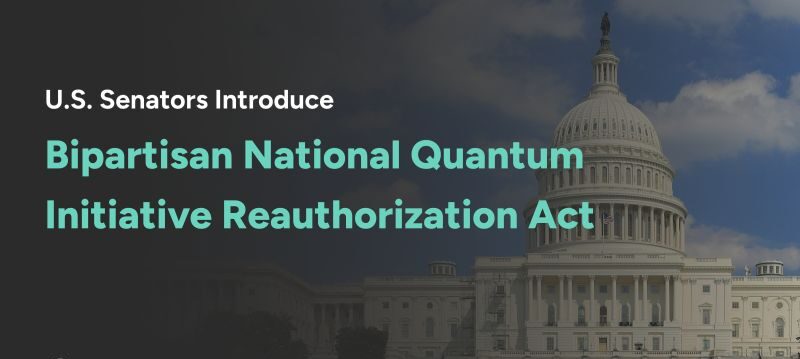
As bipartisan momentum builds behind the National Quantum Initiative Reauthorization Act of 2026, one signal is especially clear for research institutions and consortia: ecosystem-scale funding brings ecosystem-scale accountability.
Agencies supporting quantum research are no longer focused solely on scientific novelty. They are increasingly concerned with how programs perform over time, how workforce investments translate into capacity, and how collaborative structures actually function in practice. Evaluation is how those questions get answered. For institutions planning to pursue upcoming quantum-related solicitations, evaluation should not be treated as a compliance task added at the end of proposal development. It is becoming a core design feature.
At a high level, the National Quantum Initiative Reauthorization Act focuss on:
- Extend the National Quantum Initiative by a full five years to December 2034.
- Require the White House Office of Science and Technology Policy to develop an international quantum cooperation strategy to coordinate R&D activities with allies of the United States.
- Build on the work of the National Quantum Initiative to advance basic research and establish additional directives to develop practical quantum applications.
- Require each agency to develop metrics for monitoring and evaluating advancements in quantum information science and progress towards practical quantum applications and report to Congress.
- Create prize challenges to accelerate the development of quantum applications and algorithms through public-private collaboration.
- Authorize funds for NIST’s quantum research and consortium activities.
- Establish up to three new NIST quantum centers to advance research in quantum sensing, measurement, and engineering.
- Direct the Secretary of Commerce to submit a plan to strengthen quantum supply chain resilience.
- Create new NSF Multidisciplinary Centers for Quantum Research and Education, a quantum workforce coordination hub, and quantum testbeds.
- Authorize funds for NASA quantum R&D activities, including quantum satellite communications and quantum sensing research initiatives.
- Direct the Government Accountability Office to conduct a study on reducing red tape and paperwork burden related to private sector and academic participation in National Quantum Initiative activities and centers.
What Federal Agencies Will Be Looking For
Ecosystem-oriented awards introduce a different evaluation posture than traditional research grants. Reviewers and program officers expect evaluation approaches that reflect scale, coordination, and long-term outcomes. Several themes are already emerging.
- Clear Theories of Change Across Partners: Large consortium proposals are expected to articulate how activities connect to outcomes across multiple organizations. That means moving beyond isolated metrics and toward a shared theory of change that accounts for research progress, workforce development, and partnership effectiveness. When evaluation plans lack this coherence, even strong technical proposals can feel underdeveloped.
- Meaningful Workforce and Training Metrics: With workforce development elevated in the reauthorization effort, agencies will expect more than participant counts. They will look for evidence that training pipelines are effective, equitable, and aligned with national needs. Institutions that define success narrowly risk misalignment with how agencies assess impact.
- Governance and Collaboration as Evaluatable Systems: Ecosystem funding assumes that collaboration itself is a deliverable. Evaluation plans increasingly need to address how decisions are made, how partners coordinate, and how challenges are surfaced and addressed. This is an area where many consortia struggle, not because governance is weak, but because it is rarely framed in evaluative terms.
What Institutions Can Do Now to Get Evaluation-Ready
Preparation does not require waiting for a notice of funding opportunity. In fact, early work often makes the biggest difference. Start by clarifying your intended outcomes, not just activities. What should change as a result of the program, and how would you know? Next, examine where data will come from across partners. Ecosystem programs often fail to plan for data consistency, burden, and governance, all of which evaluators and agencies notice quickly. Finally, consider whether your evaluation approach reflects learning as well as accountability. Agencies increasingly value formative evaluation that supports course correction, not just summative reporting at the end.
Looking Ahead
Quantum ecosystem funding is likely to bring longer timelines, larger teams, and more complex expectations. Evaluation is how agencies ensure those investments produce durable value. Institutions and consortia that integrate evaluation thinking early will be better prepared not only to win funding but to manage it successfully once awarded. If you’re preparing for what’s next and want to strengthen your evaluation posture before solicitations are released, EBHC is well-positioned to support that work with practical, agency-aligned insight.