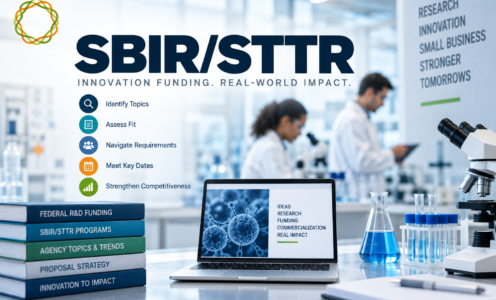
Submitting a competitive SBIR/STTR application involves managing a large number of documents, each with its own set of requirements and deadlines.


Submitting a competitive SBIR/STTR application involves managing a large number of documents, each with its own set of requirements and deadlines.

Oregon businesses can receive up to $5,000 in expert support for preparing SBIR/STTR proposals through Business Oregon’s Phase 0 and 00 grants.

First-time DOE SBIR/STTR applicants can receive expert proposal support through the DOE Phase 0 Program—quarterly enrollment and rolling support.

Missouri startups can access $2,500 in grant writing support for SBIR proposals through the state’s SBDC Phase 0 FAST Grant.

Illinois life sciences startups can access $15,000 in SBIR proposal support through the iBIO Propel Awards Program—exclusively for Propel members.

The Growth Accelerator Fund Competition strengthens accelerators and ESOs that guide deep-tech founders toward SBIR and STTR success across the U.S.

South Dakota small businesses can apply for $5,000 in support to develop and submit stronger Phase I SBIR/STTR proposals.

South Carolina startups can access USC’s FAST program for proposal guidance, mentoring, and commercialization support—rolling admissions and tailored resources.

District-based startups can receive up to $10,000 in guided support to prepare competitive SBIR/STTR proposals through DSLBD’s Phase 0 Program.

NIH abruptly paused SBIR and STTR activity, creating uncertainty for applicants who now require strategy, preparation, and airtight compliance more than ever.