
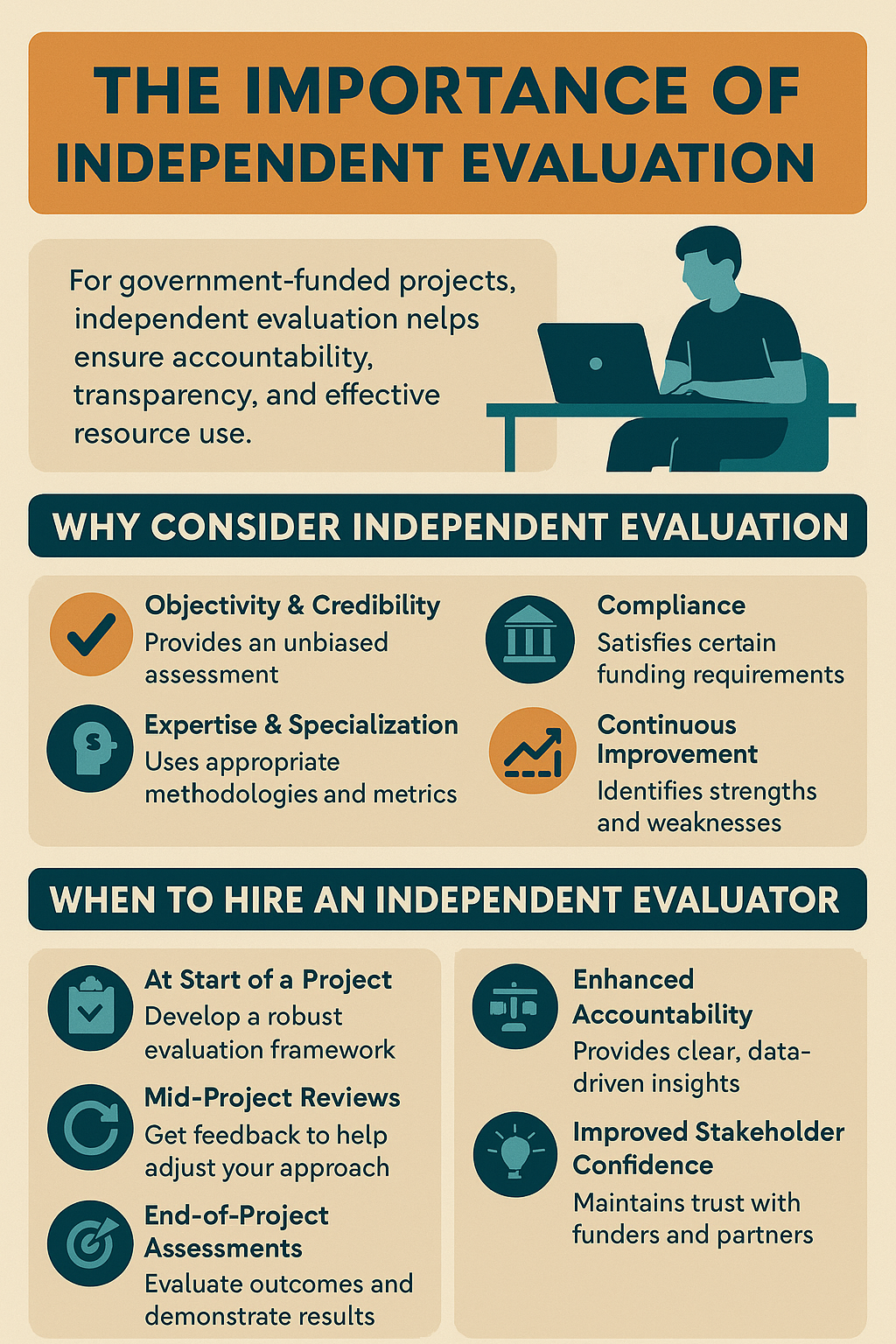
In government-funded projects, independent evaluation plays a crucial role in ensuring accountability, transparency, and the effective use of resources. External evaluators bring objectivity and expertise, providing an unbiased assessment of a project’s progress and outcomes. Knowing when and why to engage an independent evaluator can strengthen your project’s credibility and position it for future funding.
Why Consider Independent Evaluation?
Independent evaluators offer valuable perspectives that enhance the integrity and quality of a project’s assessment. Here are key reasons to consider external evaluation:
- Objectivity and Credibility: Internal evaluations may be influenced by unconscious biases or organizational constraints. Independent evaluators provide impartial assessments, lending credibility to your findings.
- Expertise and Specialization: Many external evaluators specialize in specific areas such as education, health, or technology. Their experience ensures that your evaluation uses the most appropriate methodologies and metrics.
- Compliance with Funding Requirements: Some funding agencies require third-party evaluations as part of grant conditions to ensure transparency and accurate reporting.
- Continuous Improvement: External evaluators can identify strengths, weaknesses, and areas for improvement, offering actionable recommendations to enhance project outcomes.
When to Hire an Independent Evaluator
The decision to bring in an independent evaluator depends on your project’s goals, scope, and stage. Here are some scenarios where hiring an evaluator can add value:
- At the Start of a Project: Engaging an evaluator early allows for the development of a robust evaluation framework, ensuring that metrics and data collection methods are aligned with project objectives from the outset.
- Mid-Project Reviews: Independent evaluations during the implementation phase can provide timely feedback on progress to adjust your approach as needed.
- End-of-Project Assessments: Comprehensive evaluations at the project’s conclusion demonstrate whether goals were met, offering insights that can inform future initiatives.
- Resubmissions or New Funding Applications: Strong evaluation reports can support future funding applications by showing that your project has achieved measurable success and applied lessons learned.
Some funders, especially government funders for community projects such as after-school programming, require external evaluation. One of our clients needed to seek out our external evaluation services after being informed by the funder that their internal evaluation protocol was insufficient to receive funding in subsequent years. Funders generally look more favorably on external evaluation, rather than internal.
Benefits of Independent Evaluation
- Enhanced Accountability: Independent evaluators provide clear, data-driven insights that demonstrate how funds were used and what was achieved.
- Improved Stakeholder Confidence: Transparent evaluation processes foster trust with stakeholders, including funders, partners, and beneficiaries.
- Actionable Recommendations: Evaluators don’t just report findings—they offer practical recommendations to optimize future project performance.
Selecting the Right Evaluator
To maximize the value of an independent evaluation, it’s important to choose the right evaluator for your project:
- Relevant Experience: Look for evaluators with expertise in your project’s focus area and familiarity with government-funded programs and strategic initiatives.
- Clear Communication: Ensure the evaluator can convey findings in an accessible, actionable way.
- Proven Track Record: Request references or examples of past evaluations to confirm their ability to deliver high-quality work.
Integrating Evaluation into Your Strategy
A successful evaluation doesn’t happen in isolation—it should be an integral part of your project strategy. Work closely with the evaluator to define key questions, set milestones, and ensure that data collection aligns with your objectives.
Maximizing the Impact of Evaluations
The insights gained from independent evaluations can do more than fulfill funding requirements—they refine your project, demonstrate value, and build a stronger case for future funding. By showing that your organization is committed to accountability and continuous improvement, you enhance your reputation and competitiveness in future grant cycles.
At E.B. Howard Consulting, we collaborate with organizations to develop comprehensive evaluation strategies that meet federal requirements and inform data-driven decisions. If you’re considering hiring an independent evaluator or need guidance on strengthening your evaluation plan, contact us today. Together, we can ensure your project’s outcomes are clearly demonstrated and aligned with your long-term goals.